Can Stress Affect Your Menstrual Cycle?
Understanding How Lifestyle Factors Can Influence Ovulation and Cycle Length While it’s normal for cycle length to vary slightly from month to month, factors like

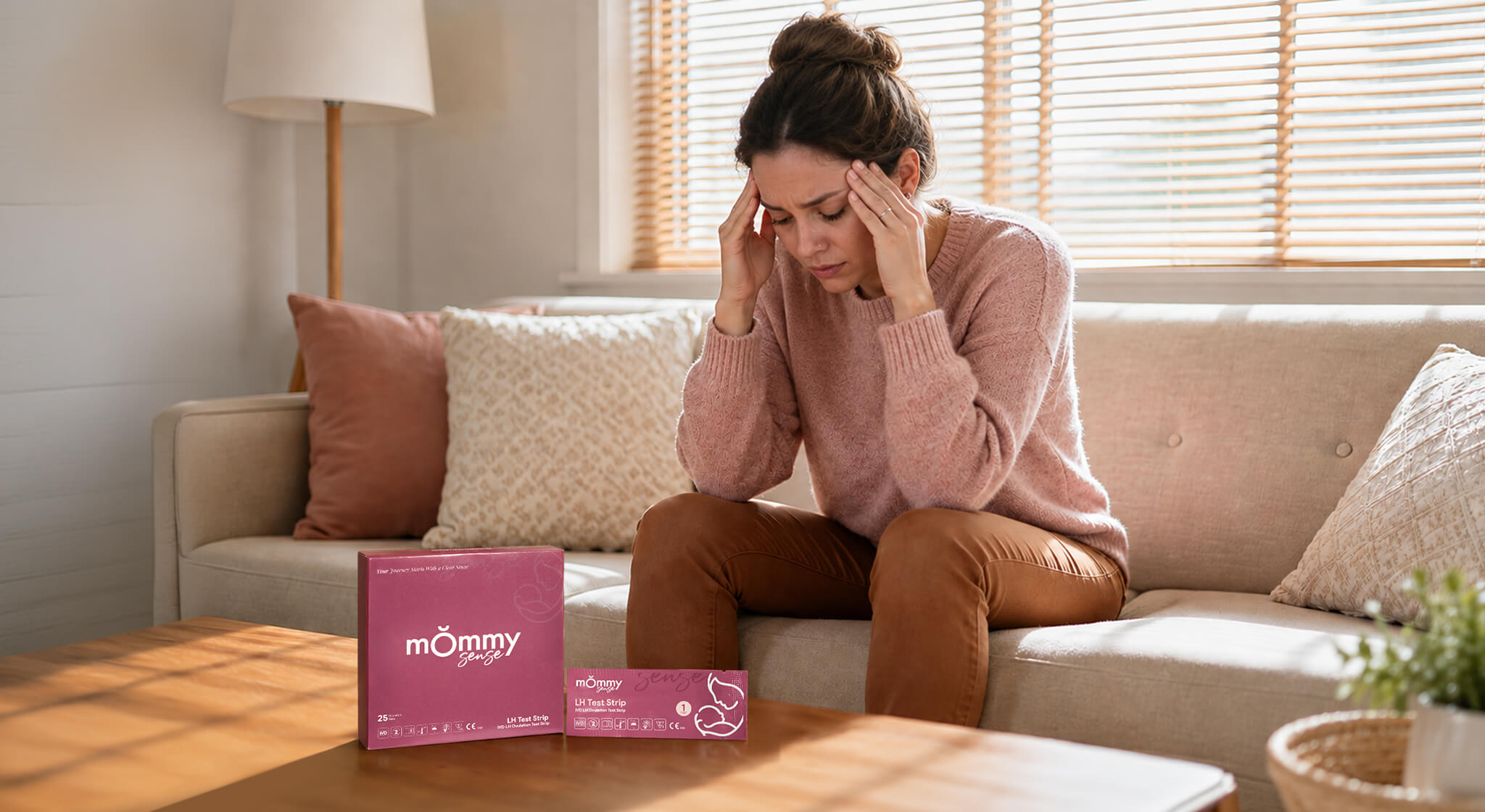
While it’s normal for cycle length to vary slightly from month to month, factors like stress, illness, travel, changes in weight, and intense exercise can all influence when you ovulate. According to the NHS, stress and anxiety are among the common causes of irregular or missed periods.
Your menstrual cycle is controlled by a delicate balance of hormones. When you experience physical or emotional stress, those hormonal signals can be disrupted, sometimes delaying ovulation.
If ovulation happens later than expected, your next period is likely to arrive later too. You may notice your cycle being longer, shorter, or less predictable for a month or two. In many cases, these changes are temporary and settle once the underlying issue is resolved.
If you’re trying to conceive, relying on calendar predictions alone can be frustrating, especially when your cycle changes unexpectedly.
Ovulation test strips offer a more personalised approach by detecting the surge in luteinizing hormone (LH) that typically occurs 24 to 36 hours before ovulation. This helps you identify your most fertile days based on your body’s hormonal changes rather than estimated dates.
MommySense Ovulation Test Strips are designed to make fertility tracking simple and reliable. By detecting your LH surge, they help you better understand your fertile window and take the guesswork out of ovulation tracking. With easy-to-read results and individually sealed strips for convenience and hygiene, they’re a practical companion for anyone trying to conceive.
Occasional changes to your menstrual cycle are common and aren’t usually a cause for concern. However, the NHS recommends speaking to your GP if your periods become consistently irregular, you’ve missed several periods, or you’re finding it difficult to conceive.
Understanding your cycle is one of the most important steps in your fertility journey. By combining healthy lifestyle habits with reliable ovulation tracking, you can make more informed decisions and feel confident every step of the way.

Understanding How Lifestyle Factors Can Influence Ovulation and Cycle Length While it’s normal for cycle length to vary slightly from month to month, factors like

Evaporation lines, dye fronts, and why faint doesn’t mean “less pregnant.” A faint second line is one of the most common reasons people search for

The textbook cycle is a myth. Here’s what “normal” actually looks like. The 28-day cycle is often treated as the standard against which every other

Copyright © MommySense 2026 — All rights reserved.