
5 Things No One Tells You About Fertility
Five reassuring insights to help you better understand your cycle, ovulation, and the journey to conception. You’ve probably been awake at 2 a.m., wondering. ‘Am

You’ve probably been awake at 2 a.m., wondering. ‘Am I doing this right? Is my body “normal””?’ Take a breath.
Wherever you are in this journey, you’re not behind, and you’re not alone. The NHS shares something gently reassuring: if you’re under 40 and have regular intercourse without contraception, about 8 in 10 women will conceive within a year. So, if it’s taking a little longer for you, that’s far more common than it feels in the quiet moments. Here are some things to remember:
Every month, your body is talking to you in its own way. Cycle length, mood and energy, are all little clues if you take the time to notice them. “Normal”” looks different for everyone, so there’s no need to measure yourself against anyone else’s rhythm. Yours is simply yours!
Your body has a window each month when it’s most ready, usually around ovulation, which the NHS says falls about 12–16 days before your period starts. If you’d like an estimate of your own, the NHS ovulation calculator is a good place to start. For a closer, more personal look, you can buy the MommySense Ovulation Test which can detect the rise in luteinising hormone (LH), making it easier to track your ovulation peak with confidence.
You’re not testing yourself. You’re getting to know yourself. A calendar app is a nice place to start, but it’s really just an average. Your body tells a fuller story through physical signs which you can track with the help of an ovulation test, which reads your body’s real signals rather than being a prediction or estimate.
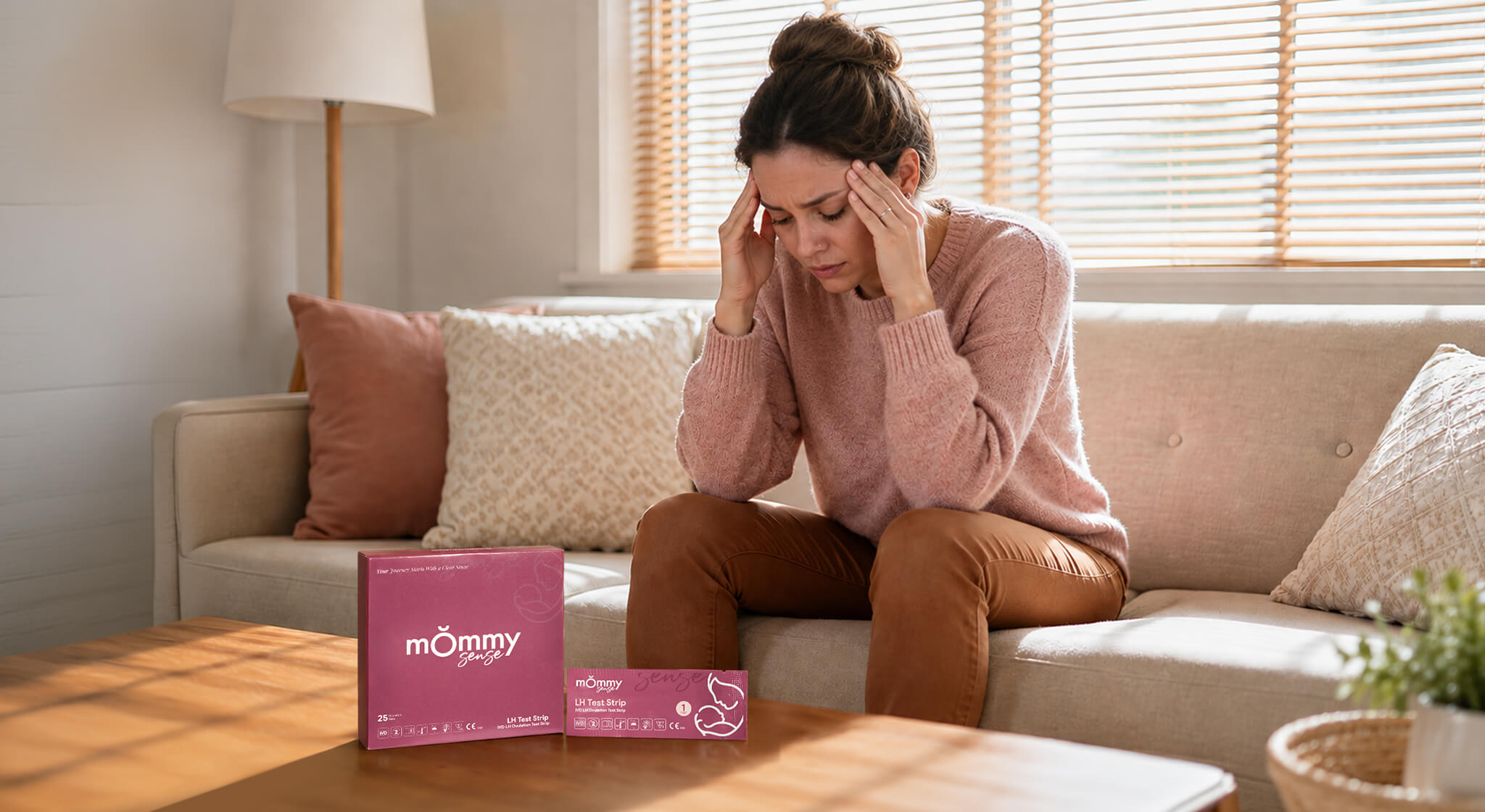
Trying to conceive can stir up more emotions than anyone tells you about, and the NHS notes that stress is one of the major things that can affect fertility. So, resting isn’t being lazy, it’s simply a part of caring for yourself. Trust what your body is telling you and give yourself the same kindness you’d give to any loved one going through this.
Pregnancy tests are simple, but a few small habits make all the difference:
If the result does not concur with what your instincts tell you, take a breath. Give it a few days and test again.
Remember the 2 a.m. version of you? She deserves to feel informed and supported, whatever her path looks like. If you’ve been trying for over a year, or if you’re aged 36 or over, the NHS suggests speaking with your GP. Asking for help is another way of getting to know your body.
Ready to get to know your body better? Explore MommySense Ovulation and Pregnancy tests made for exactly where you are right now.

Five reassuring insights to help you better understand your cycle, ovulation, and the journey to conception. You’ve probably been awake at 2 a.m., wondering. ‘Am

Why the absence of symptoms doesn’t rule anything out You thought you’d feel it. A little nausea. More tiredness. Something. Instead, you feel completely normal.
Understanding How Lifestyle Factors Can Influence Ovulation and Cycle Length While it’s normal for cycle length to vary slightly from month to month, factors like

Copyright © MommySense 2026 — All rights reserved.